Dirtbound
Dirtbound: The Definitive 3D Browser Rally Racing Guide
Dirtbound is an exhilarating, browser-based 3D rally racing game that combines lightweight retro aesthetics with authentic vehicle physics and dynamic terrain simulation. Crafted for adrenaline junkies and racing enthusiasts alike, the Dirtbound game strips away unnecessary bloat to deliver pure, uncompromised off-road handling right inside your desktop or mobile browser. From tight gravel hairpins and undulating dirt trails to sweeping tarmac transitions, every stage demands razor-sharp reflexes, deliberate throttle moderation, and an intuitive feel for automotive inertia.
Unlike conventional arcade racers where cars handle like magnetic slot machines on rails, Dirtbound simulates authentic weight transfer, independent suspension travel, tire surface friction, and aerodynamic drag. Whether you are navigating procedural mountain loops or testing your limits on time-trial leaderboards, mastering this game requires understanding vehicle dynamics, momentum preservation, and calculated cornering techniques. This comprehensive guide walks you through every facet of Dirtbound, from fundamental control layouts to professional rallying tactics.
What Is Dirtbound? The Browser 3D Rally Experience
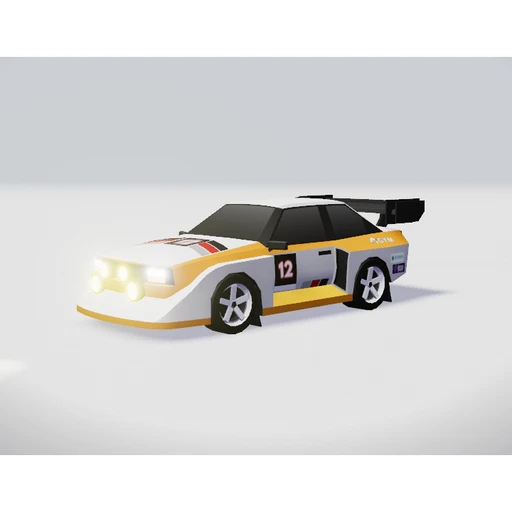
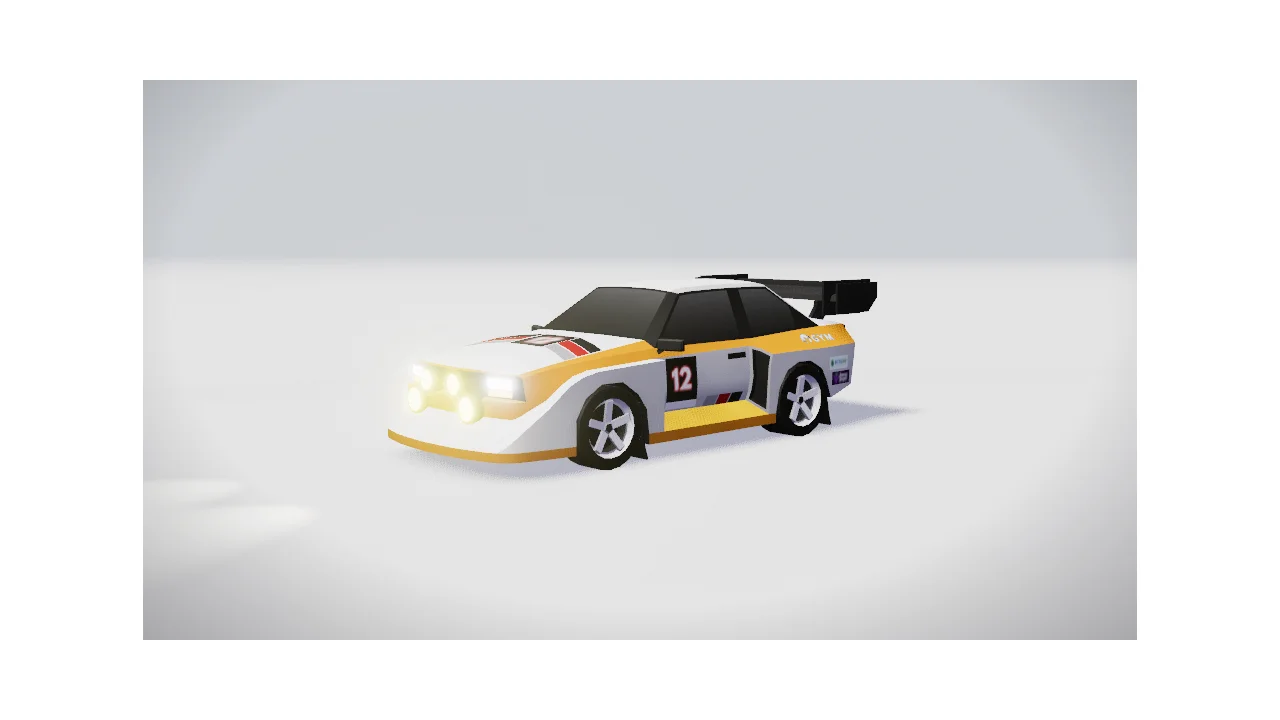
At its core, Dirtbound is built around low-latency WebGL rendering and advanced rigid-body physics. Players step behind the wheel of iconic rally-inspired machines, characterized by angular low-polygon silhouettes and nostalgic retro styling reminiscent of golden-era arcade cabinets. Yet beneath this clean, stylized visual presentation lies a sophisticated physical engine that calculates tire slip angles, lateral gravitational forces, and suspension compression in real time.
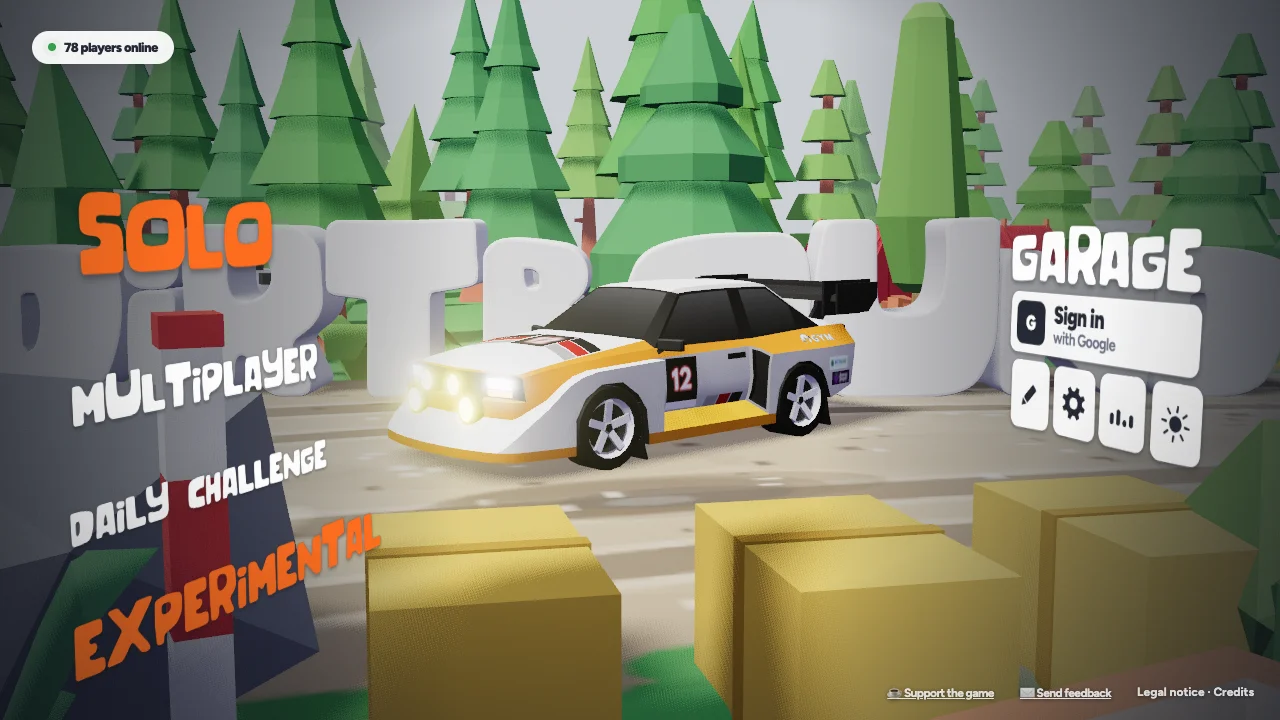
The game offers an instantaneous jump into competition. There are no mandatory downloads, no invasive launchers, and no pay-to-win upgrade trees standing between you and the starting line. Launching Dirtbound places you directly in the interactive 3D showroom, where you can inspect your machine, review vehicle attributes, customize liveries, and select your preferred driving challenge. The audio landscape is equally immersive, featuring responsive engine pitch shifts, transmission whining, resonant gravel spray against the floorboard, and ambient atmospheric audio that captures the rugged tranquility of off-road wilderness.
Core Gameplay Loop and Game Modes Explained
The fundamental objective in the Dirtbound game is straightforward yet endlessly challenging: complete technical stages in the fastest possible elapsed time while keeping your car on the road surface. Straying too far into deep ditches, dense vegetation, or rocky borders rapidly bleeds velocity and risks destabilizing your chassis.
Dirtbound provides multiple distinct gameplay modes catering to different racing preferences:
1. Solo Rally Stages: Embark on dedicated point-to-point stages characterized by varied elevation profiles, sudden elevation drops, and technical chicanes. Each sector challenges your ability to read upcoming road curvature.
2. Daily Challenge: A signature feature of Dirtbound, the Daily Challenge presents a globally shared, procedurally seeded circuit that refreshes every 24 hours. Every racer worldwide competes on identical track conditions with zero pre-practice advantages, submitting their fastest lap times to the synchronized global leaderboard.
3. Track Customizer & Circuit Mode: For drivers who enjoy creative freedom, Dirtbound integrates course exploration and custom track generation, allowing players to test vehicle dynamics across generated spline loops and expansive open-terrain arenas.
4. Multiplayer Lobbies: Compete head-to-head against real racers around the world in synchronized multiplayer lobbies. Race against live ghost cars, trade slipstreams down high-speed straights, and battle for track position in real-time lobby heats.
Complete Keyboard, Gamepad, and Touch Controls Guide
Responsive control execution is the bedrock of successful rally driving. Dirtbound provides native support for desktop keyboards, analog USB/Bluetooth gamepads, and virtual on-screen touch interfaces for mobile and tablet players.
Primary Desktop Keyboard Controls
- W or Up Arrow: Accelerate / Throttle. Apply continuously on straights and modulate through high-speed sweepers.
- S or Down Arrow: Footbrake / Reverse. Slow down rapidly before corners; hold while stationary to engage reverse gear.
- A or Left Arrow: Steer Left. Rotate front wheels to direct chassis angle.
- D or Right Arrow: Steer Right. Counter-steer into slides to catch fish-tailing rear ends.
- Spacebar: Handbrake / E-Brake. Instantly locks the rear axle, initiating sharp rotation for hairpins and tight switchbacks.
- C: Camera View Toggle. Switch seamlessly between the isometric tactical perspective and the close third-person chase camera.
- R: Instant Reset / Quick Respawn. Re-aligns your vehicle onto the center line of the track if overturned or hopelessly trapped.
- Escape / P: Pause Menu. Opens race telemetry, volume controls, and stage exit options.
Gamepad Configuration
For the ultimate tactile experience, plug in an Xbox, PlayStation, or generic HID gamepad. Dirtbound maps throttle and progressive braking to the right and left analog triggers, steering to the primary analog thumbstick, and handbrake to the primary bottom face button (A or Cross). Analog control allows for micro-adjustments in steering input, which drastically reduces unexpected snap-oversteer on loose dirt.
Mobile and Touch Screen Layout
When loaded on a touchscreen smartphone or tablet in landscape mode, Dirtbound renders a virtual floating directional thumbpad on the left half of the display, with discrete touch buttons for acceleration, braking, and emergency handbrake on the right. Ensure auto-rotation is locked to landscape for the most comfortable grip and clear track visibility.
Realistic Dirt Physics, Weight Transfer, and Drifting Mechanics
Understanding vehicle balance is the single most vital skill in the Dirtbound game. In rally driving, cars rarely travel in the exact direction the tires are pointed. Instead, the driver manipulates slip angles—the difference between the heading of the front wheels and the actual vector of momentum.
The Dynamics of Weight Transfer
When you accelerate, the car's weight transfers backward onto the rear axle, compressing the rear springs and lifting the front. This increases rear traction but lightens the front wheels, inducing understeer (where the car pushes straight ahead despite turning the wheel). Conversely, lifting off the throttle or tapping the footbrake shifts vehicle weight forward onto the front tires, maximizing front-end steering grip while unloading the rear axle. This unweighting of the rear is what allows drivers to initiate controlled slides on loose gravel.
Executing the Scandinavian Flick (Pendulum Turn)
To navigate a sharp 90-degree corner or hairpin without sacrificing excessive speed, execute the classic Scandinavian flick:
1. As you approach the turn at speed, briefly steer *away* from the corner (to the outside of the road).
2. Abruptly release the throttle and steer firmly *into* the apex of the corner while dabbing the brake.
3. The violent lateral weight transfer breaks rear tire adhesion, pivoting the tail outward.
4. Counter-steer immediately in the direction of the slide while reapplying throttle to power smoothly through the apex.
Procedural Tracks, Circuit Customization, and Daily Challenges
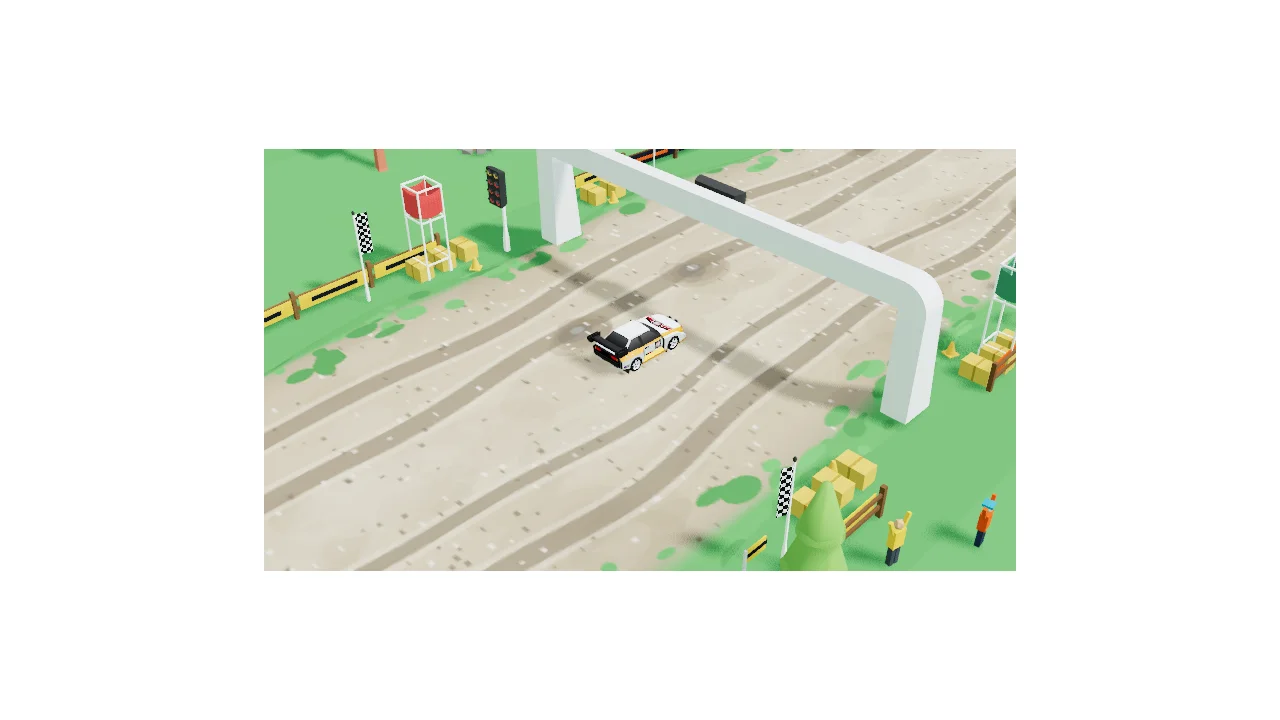
One of the standout technical marvels of Dirtbound is its dynamic procedural track generation system. Rather than restricting drivers to a handful of static, repetitive circuits, the game's engine constructs endless road variations using mathematical spline algorithms. Every run can feature unique combinations of blind crests, deceptive camber shifts, off-camber dips, and narrowing chicanes.
Reading the Terrain and Biomes
Different biomes and visual themes in Dirtbound present distinct surface grip characteristics:
- Packed Earth: Offers predictable, high-grip performance, allowing for aggressive late braking and tighter cornering lines.
- Loose Gravel & Dust: Reduces overall friction coefficients by up to 40%. Expect extended braking distances and pronounced slide angles.
- Mud & Grass Margins: Drastically decreases forward drive and can cause catastrophic spin-outs if one side of the vehicle drops off the road while under full acceleration.
The Daily Challenge Ritual
For competitive drivers, the Daily Challenge is Dirtbound's premier testing ground. Because every participant receives the exact same generated seed, victory depends entirely on pure driving skill, reaction times, and mental composure. Reviewing your sector splits against the global ghost vehicle provides invaluable insight into optimal braking points and apex clipping lines.
Essential Beginner Strategies and Cornering Techniques
Newcomers to the Dirtbound game often struggle with excessive spinning or understeering wide into barriers. Adopting these foundational habits will immediately lower your stage times and keep your vehicle pointed down the track:
1. Slow In, Fast Out: The golden rule of motorsport applies doubly on gravel. Entering a corner 10 km/h too fast will push you wide into the ditch, costing seconds of recovery time. Brake early, settle the chassis before turn-in, and use full acceleration to blast out of the exit.
2. Avoid Full Steering Lock at High Speed: Jerking the steering wheel to maximum lock while traveling at high velocity overloads front tire friction limits, causing severe understeer. Smooth, measured steering inputs preserve cornering traction.
3. Do Not Ride the Handbrake: The handbrake is a momentary pivot trigger, not a braking tool. Tap it for a fraction of a second to initiate yaw rotation, then release it immediately so your driven wheels can regain rotational inertia.
4. Look Ahead to the Exit: Do not fixate on the hood of your car or the road directly in front of your bumper. Keep your eyes focused down the track on the corner exit; your hands will naturally guide the vehicle along the desired trajectory.
5. Respect Crests and Jumps: Hitting a blind crest with your wheels turned will send your car tumbling into the trees upon landing. Straighten your wheels before becoming airborne and brake slightly before takeoff if the road curves sharply after the jump.
Advanced Driving Tactics: Throttle Feathering and Trail Braking
Once you have consistent stage completions under your belt, shaving off final seconds requires mastering nuanced micro-inputs:
Trail Braking on Loose Surfaces
Trail braking involves carrying a decreasing percentage of braking pressure deep into the corner entry, rather than releasing the pedal entirely before turning. By maintaining mild front brake pressure as you begin turning, the car keeps its nose pressed firmly against the dirt, retaining maximum front traction right up to the apex. As you hit the clipping point, progressively roll off the brake and squeeze on the throttle in one continuous, fluid transition.
Throttle Modulation and Feathering
On loose gravel surfaces, mashing the accelerator to 100% simply spins the tires, creating excessive tire smoke without generating forward thrust. Practice 'feathering' the accelerator—rapidly tapping or holding partial throttle around 60–75%—to keep the engine in its optimal torque band while allowing the tires to claw through loose topsoil for maximum forward grip.
Browser Performance, WebGL Optimization, and Troubleshooting
Dirtbound is optimized for maximum compatibility across Chromium, Safari, Firefox, and WebKit-based mobile browsers. To ensure an uncompromised 60 frames per second experience:
- Hardware Acceleration: Confirm that hardware acceleration is enabled in your browser settings (Settings -> System -> Use graphics acceleration when available).
- Tab Focus & Memory: Close excessive background tabs, video streams, or heavy spreadsheet applications to free up GPU memory and eliminate micro-stutters.
- Audio Unlock: Modern browsers require an initial user gesture before playing audio. Click anywhere inside the game frame to activate rich engine and tire sound effects.
- Resolution Scaling: If your laptop or mobile device experiences frame drops on high-DPI retina displays, check the in-game settings panel to adjust render resolution scaling for butter-smooth performance.
Frequently Asked Questions
What is Dirtbound and how do I play it?
Dirtbound is a free, browser-playable 3D rally racing game featuring realistic vehicle physics, procedural dirt tracks, and responsive handling. You can play directly on Dirtbound.me on desktop or mobile without downloading any files.
What are the main controls for the Dirtbound game?
Use W/Up Arrow to accelerate, S/Down Arrow to brake/reverse, A/Left Arrow and D/Right Arrow to steer, Spacebar for the handbrake, C to toggle camera perspectives, and R to reset your vehicle.
Can I play Dirtbound on my phone or tablet?
Yes! Dirtbound features responsive touch controls including an on-screen directional thumbpad and dedicated throttle/brake pedals when opened in landscape orientation on any mobile browser.
How does the Daily Challenge work in Dirtbound?
The Daily Challenge generates a unique, globally shared rally stage every 24 hours. All players worldwide race on identical track layouts, and their fastest times are submitted to a competitive global leaderboard.
Does Dirtbound support gamepads and controllers?
Yes, standard USB and Bluetooth gamepads (Xbox, PlayStation, Logitech) are automatically recognized by Dirtbound with plug-and-play analog steering and trigger acceleration support.
How do I stop my car from sliding out of control?
Avoid sharp high-speed steering inputs, brake before entering turns rather than during them, and counter-steer smoothly into slides while gently feathering the throttle to regain rear-wheel grip.
Dirtbound proves that deep, satisfying racing physics and high-speed off-road thrills can thrive right inside your web browser. Jump behind the wheel, master the art of the drift, and etch your name into the rally leaderboards today!